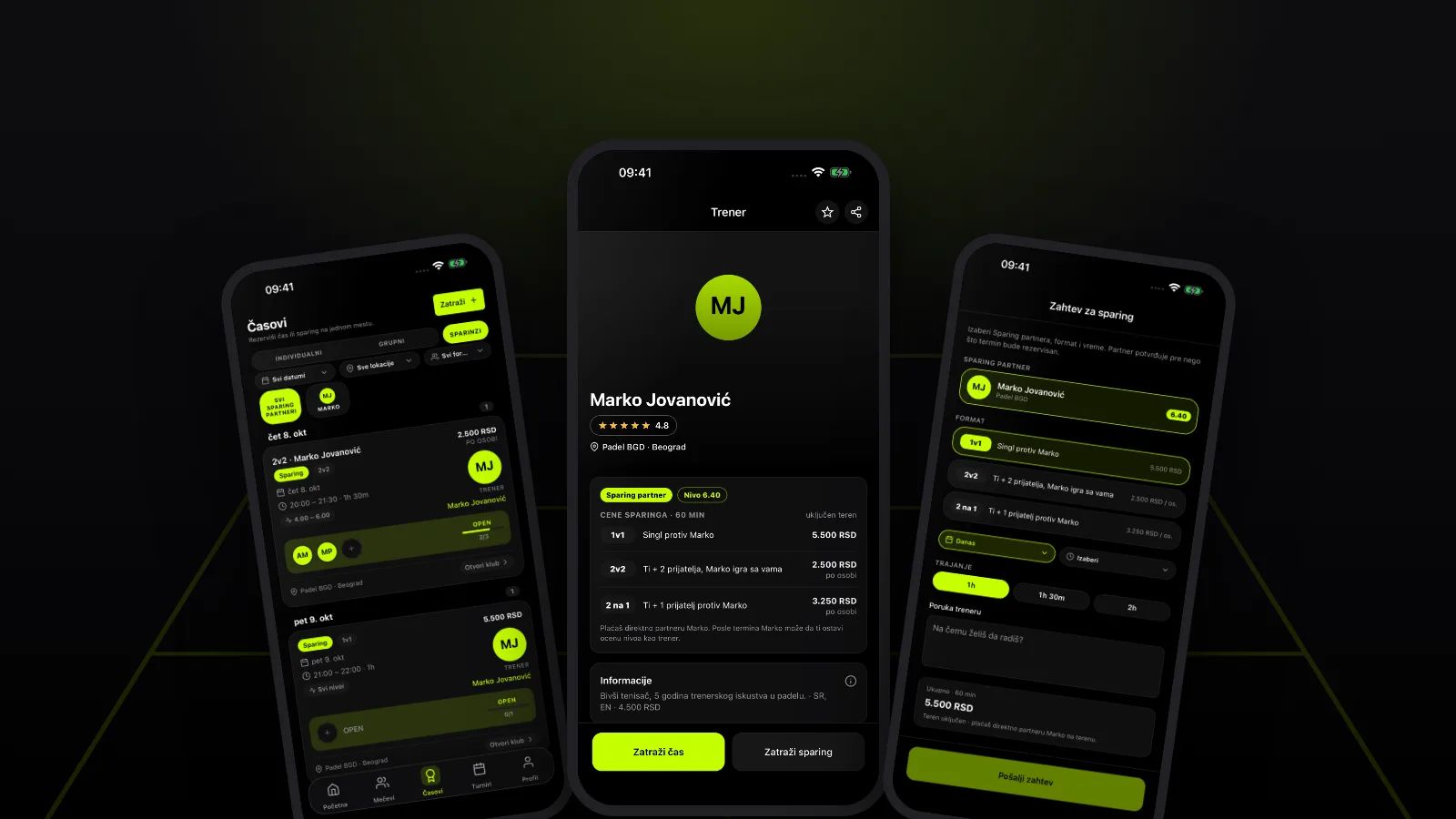
What padel sparring is, how it differs from a lesson and a regular match, how to pick a sparring partner and format, and how to book sparring in PadelDropIn.
You've played with the same group for months. The matches are fun, but everyone knows everyone's game by heart, and there's a club tournament in two weeks. Your bandeja and serve feel solid in lessons, but you have no idea how they'll hold up in a real point against someone stronger. That's exactly what sparring is for.
Short answer: padel sparring is an hour on court with a sparring partner — a coach or a strong player — where you play real, match-like points against someone better than you. Unlike a lesson, there's little explaining and few drills; unlike a regular match, the goal is to test what you can do under pressure. You can play it 1v1, 2v2 or 2 vs 1.
Contents
- What is padel sparring?
- Sparring vs a lesson vs a regular match
- When sparring is worth it
- Formats: 1v1, 2v2 and 2 vs 1
- How to choose a padel sparring partner
- What to agree before the session
- How to book sparring in PadelDropIn
- Padel sparring FAQ
- How to get started
What is padel sparring?
The word comes from combat sports: a sparring round looks like a real fight, but the point is to improve, not to win. Padel works the same way. You get an hour on court with someone who plays better than you, and you play points at real match pace.
Your sparring partner can be a coach or a strong player. A coach finds it easier to adjust the pace and spot where you're going wrong; a strong player gives you the feel of a genuine opponent. That's why people look for both "sparring with a padel coach" and "a padel sparring partner" — each makes sense, depending on what you need.
Sparring vs a lesson vs a regular match
From the outside all three look alike: a court, rackets, balls. The difference is what you get out of them.
| Lesson | Sparring | Regular match | |
|---|---|---|---|
| Focus | Technique and drills | Real points at a higher pace | Playing and socialising |
| Across the net | A coach who explains | A coach or stronger player who plays | Players at your level |
| How much talking | Lots, with repetition | Little; a short debrief at the end | Up to you |
| When to pick it | Learning a new shot | Testing what you've learned | You just want to play |
In a lesson the coach stops play, explains the movement and has you repeat it twenty times. In sparring the point is played out, against someone who punishes mistakes. A regular match is usually with people at your level, so you rarely leave your comfort zone.
When sparring is worth it
- Before a tournament. A few higher-tempo sessions prepare you for opponents you don't know.
- After a run of lessons. A shot that works in a drill isn't the same as one that works in a point. Sparring shows the gap.
- When you've plateaued. Playing someone stronger quickly reveals what's holding you back — positioning, decisions or fitness.
- When there's no one stronger around. If your group is at your level or below, sparring gets you a tougher opponent without hunting for a new crowd.
If you're just starting out and still learning the basic shots, a lesson will probably do more for you than sparring.
Formats: 1v1, 2v2 and 2 vs 1
- 1v1 — you and the sparring partner, one on one. The most ball contact and the most physical effort. How two-player padel on the diagonals works is covered in padel singles: how to play 1v1.
- 2v2 — the sparring partner is the fourth player for your group of three. It's the closest thing to real doubles, so it's a good choice before a tournament.
- 2 vs 1 — the two of you against the sparring partner. You and your partner work as a pair, while one strong player makes you cover the court and talk to each other.
How to choose a padel sparring partner
- A level a little above yours. An opponent who's far too strong ends every point before you try anything; a good sparring partner pushes you without crushing you.
- Coach or player. If you'd like a short debrief afterwards, go with a coach. If you just need a strong opponent, a player is a perfectly good choice.
- The formats on offer. Not everyone offers every format, so check that the one you need is available.
- Club and time. Pick a club where you already play and a time when you'll arrive fresh.
What to agree before the session
- The goal of the hour. For example, "I want to test my net game" or "I just want as many high-tempo points as possible".
- Format and number of players, so nobody turns up surprised.
- Whether you keep score or play freely, point by point.
- Price and payment — how much, and whether the court is included.
- A debrief at the end — whether you want short feedback.
Basic court manners apply here too: be on time, say if you're running late, and thank your partner afterwards. More in padel etiquette: how to behave on court.
How to book sparring in PadelDropIn
In the PadelDropIn app, sparring lives in the Lessons tab, in the third segment, Sparring, next to Individual and Group. There you'll find sparring partners sorted by level, a format filter, and each partner's Open sessions.
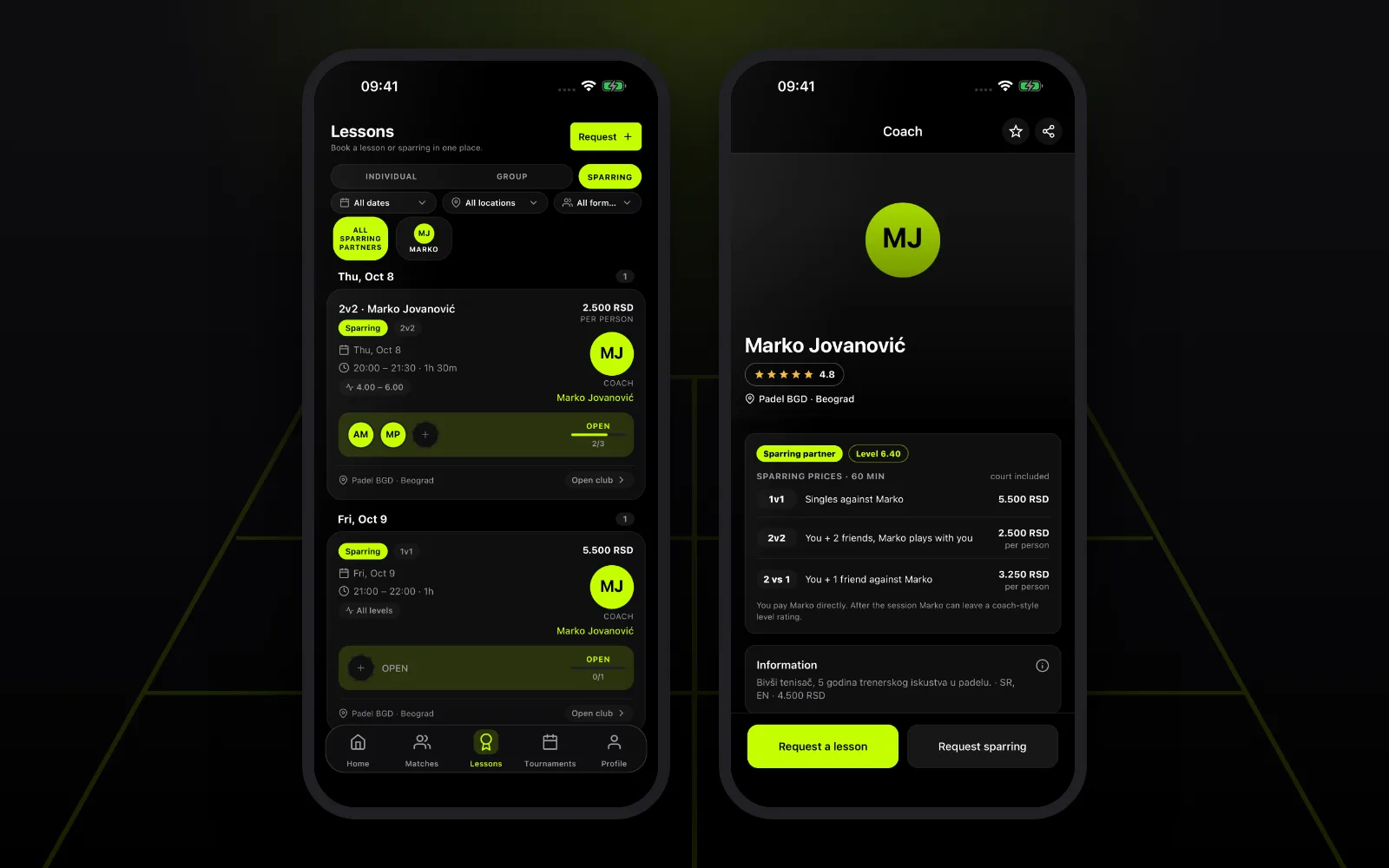
Sparring partners are approved coaches and players at level 5.0 or higher, and each one is reviewed by the PadelDropIn team. A coach's profile shows their sparring card. On the home screen, a Play with the best row lists open sparring sessions in the next 7 days; when there are none, the row is hidden.
There are two ways to play:
Take a seat in an open session
The sparring partner publishes a session and you take a seat. It's the quickest route when the club, time and format suit you.
Request sparring
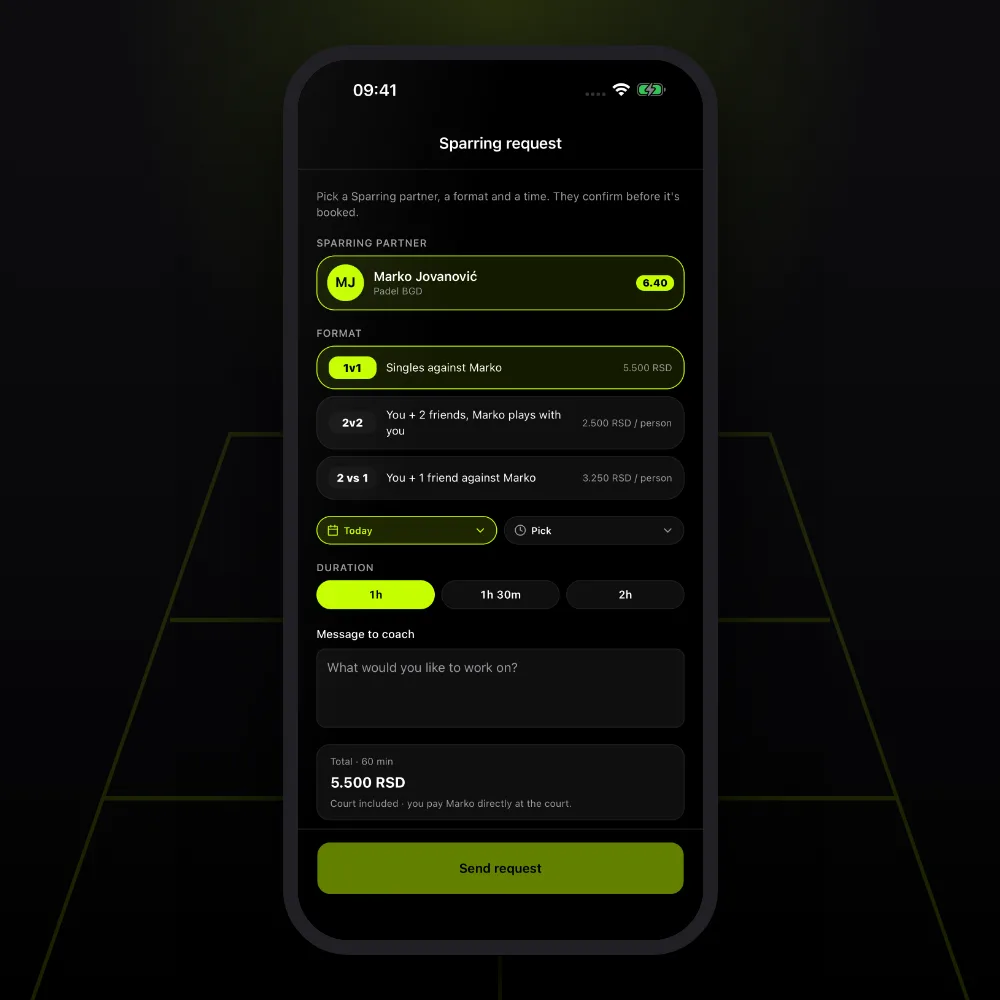
If none of the open sessions fit, tap Request sparring. Choose the sparring partner, club, format, date, time and duration, then tap Send request. The partner then confirms.
Good to know:
- Payment isn't in the app. You pay the sparring partner directly at the court, and the court is included in the price. Prices are shown per person, in Serbian dinars (RSD).
- Sparring doesn't affect your level. The app marks it as not a rated match. Afterwards, the sparring partner may leave an optional assessment of your level. How levels work is explained in padel levels: what they mean and how they're calculated.
- A reminder before it starts. As with lessons, you get a reminder before your sparring session begins.
For everything else that's new in the app, read what's new in PadelDropIn 1.0.28.
Padel sparring FAQ
Does sparring affect my level? No. Sparring isn't a rated match, so your level doesn't change. The partner can leave an optional level assessment.
Who can be a sparring partner? Approved coaches and players at level 5.0 or higher, reviewed by the PadelDropIn team. Juniors and friend profiles managed by another player can't offer sparring.
Do I need to book the court separately? The court is included in the sparring price, and you pay the whole amount directly to the sparring partner at the court.
Does sparring replace lessons? No. A lesson is for learning technique; sparring is for testing it in play. They work best together.
How to get started
- Decide what you need: tournament prep, a stronger opponent, or a test of what you're working on in lessons.
- Pick a format: 1v1, 2v2 with your group of three, or 2 vs 1.
- Download the PadelDropIn app and open Lessons → Sparring.
- Take a seat in an open session or send a request with Request sparring.
- Before the hour, agree on the goal, scoring and a debrief, then pay your sparring partner at the court.
The club network is gradually expanding in the region; Belgrade is active right now.
Download PadelDropIn
Find open matches, clubs, and padel partners in your city — free for players.